GBT 2026 M&E Forecast

American Express Global Business Travel's Sophia Eriksson and Arnau Canyadell Sala took to the stage at IBTM this week, presenting their 2026 Meetings & Events Forecast - a survey of 601 meeting professionals across 8 countries, completed in July 2025. Unfortunately I couldn't be there, but I did spend some time going through their findings - super interesting, thanks guys!
For those in a hurry, here are the Top 5 Takeaways:
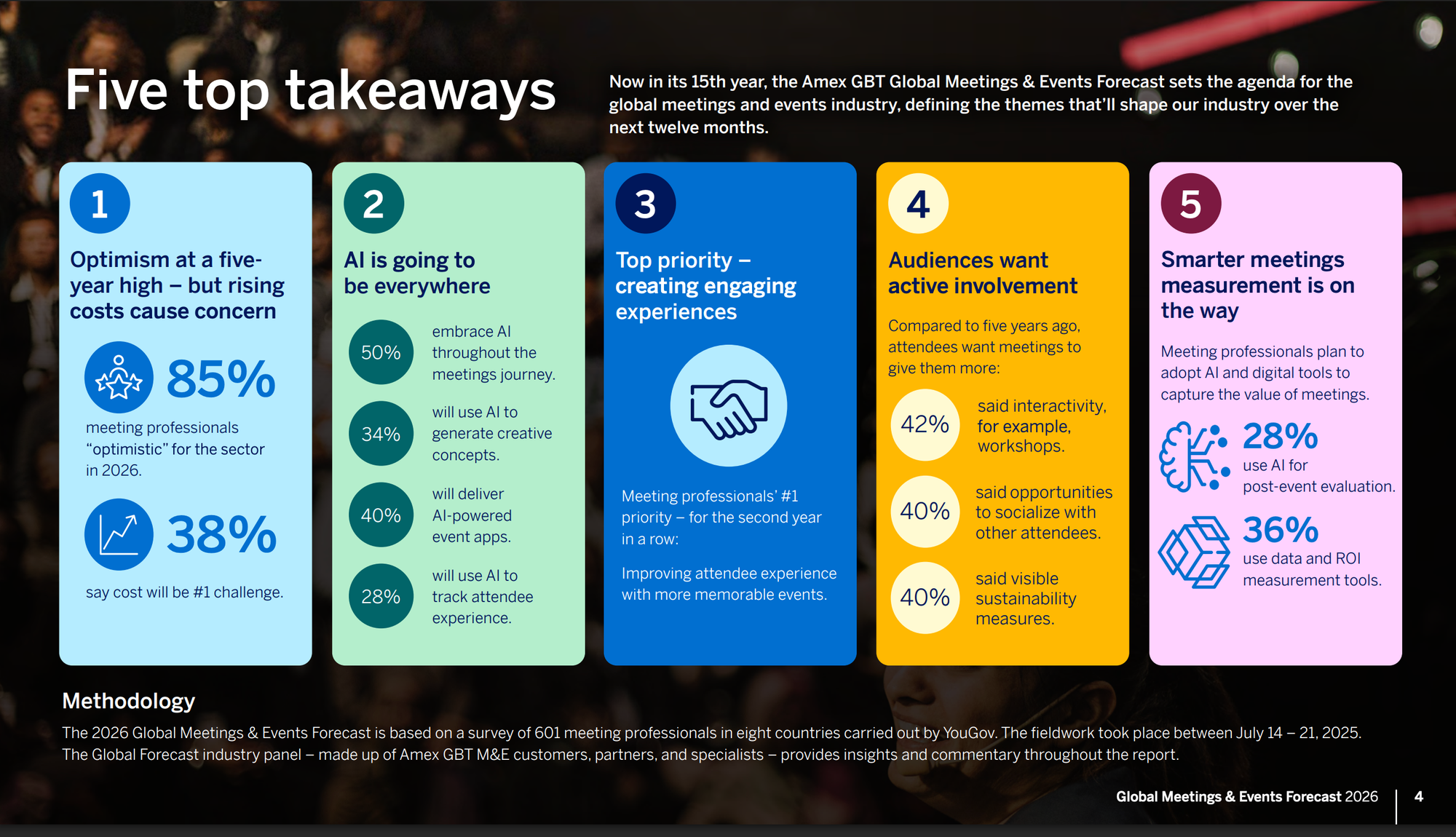
For those with a little more time, here is the full report, and some opinions from myself, all with an event-tech lens.
We're pushing an open (but heavy) door
Fact - event planners want innovation. The word AI appears 44 times in the report, so it's clearly front of mind. I'd suggest it isn't AI specifically they're after; more innovation.
One of the challenges is no event planner has an endless pot of cash to fund innovation. 47% say their 2026 budgets will increase slightly, which sounds OK - but the reality is budgets may not increase enough to keep pace with rising prices. No event planner is going to be dishing out blank cheques anytime soon 😜
The key message (for event-tech innovators) is you're pushing an open door, but the WOW factor alone isn't going to cut it. Be ready to prove your ROI.
Innovation isn't the silver-bullet - you've got to put the work in
Innovation alone will never be the silver-bullet. Technology must be implemented and communicated well - otherwise you have an embarrassing and expensive flop on your hands.
Early in my career I learnt the hard way - giving prospects the impression they could sign a contract, sit back and watch the magic happen with zero effort. It's a great sales pitch, but it's not the reality, and you're the one left to pick up the pieces when it all goes wrong. Trust me, I know 😩
Today my approach is very different. I tell prospects what will be expected of them and what failure will look like if they don't play their part. It can go one of two ways, each equally telling:
Response 1 - Yeah....we're not doing that
Response 2 - OK understood, let me pull in the right people to talk it through.
If you receive Response 1, it may be time to walk away. If you receive Response 2, you've set the foundations for a successful partnership, based on honesty and trust.
Fragmentation is a challenge but also a BIG opportunity
There's a fair amount of fragmentation in event-tech, a view echoed by Ariana Reed of GBT
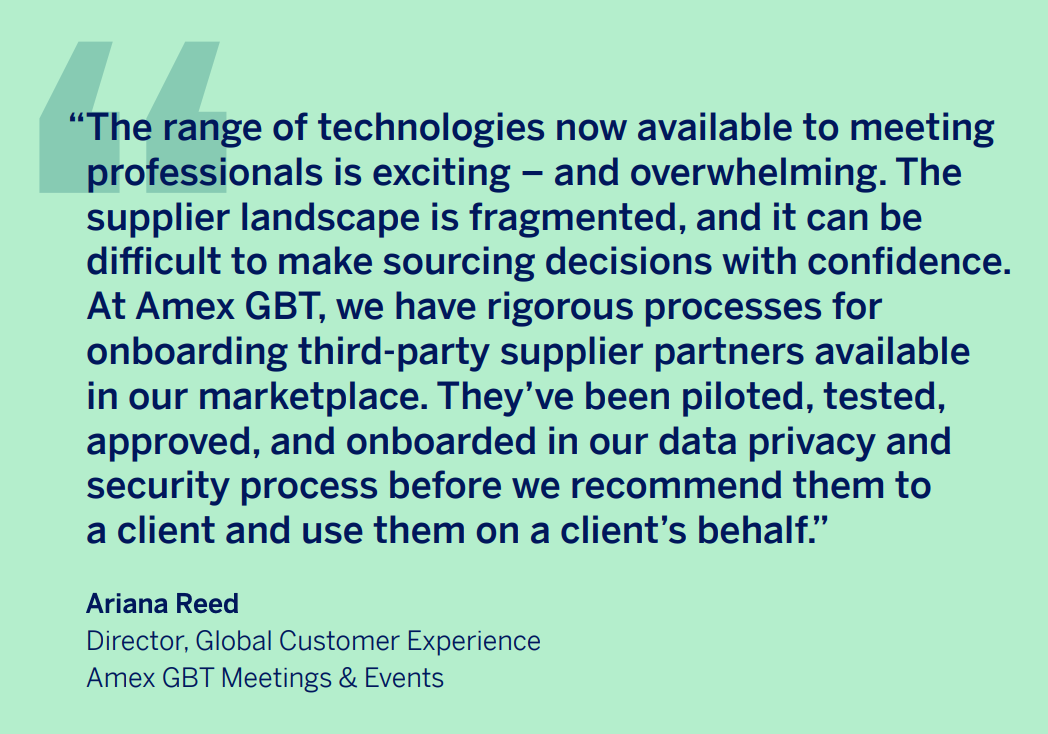
Enterprise events are complex, driving a need for specialist providers, be it registration, housing or networking apps. Multiple providers work on a single event, often delivering their services in siloes.
It's easy to see how that fragmentation could impact both the customer journey and the quality of data insights delivered post event. This is where I see an opportunity.
Event-tech vendors and agencies have the opportunity to break out of their silos, becoming more inquisitive, collaborating to understand and improve the customer journey, whilst unlocking richer data insights.
Experience is key, but it applies across the entire customer journey
I love this quote from Emma Bason of GBT. I 100% agree.
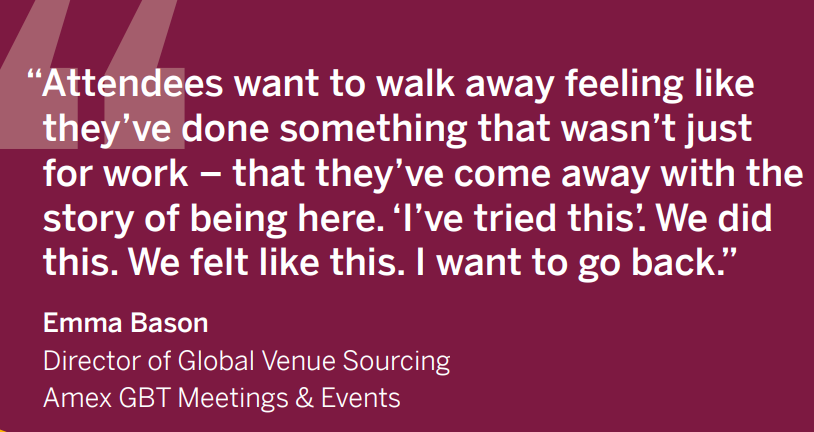
The challenge is knowing what a positive experience looks like for different people. Nearly 1 in 3 meeting planners are worried about it.
I get it, and I often question whether keynotes telling us what each generation does/doesn't like are helping or hindering. Sometimes in recognising differences, we end up assuming everyone in that generation is the same - which is wrong 🤷
Whilst ultimately I believe the answer is talking to delegates, technology can play a part. I recently read about Bishop-McCann's JOY INDEX, combining AI with Neuroscience, detecting engagement levels of an audience. An interesting piece of innovation that focuses on the individual, not the generation they fit into.
Experience isn't just about on-site though. Our perception of the experience starts when we hear about an event and it ends quite a while after the event concludes. The elements either side of on-site matter, but sometimes they don't make the grade, dragging down the delegate's perception of the event:
- Amateur event websites (like this one 😉)
- Single language website/comms - when we know the audience is international
- Multiple links (or no links) to book hotels or transport
- Delegates being asked to call or email, when the process should be online
- Poor venue selection - for housing/travel
- Long queues entering venues
Individually, each may not have a huge impact, but combined, they create a negative perception, no matter how awesome the event itself is.
No event planner wants to negatively impact the delegate experience - why would they. In many cases, they're flat out and might not even know the problem exists. As their partners, I believe they'd expect us to not only tell them, but also bring solutions. Either help them to fix it, or refer them to someone who can 😜
Disclaimer - The views expressed are my own and do not represent those of my employer. Any references to companies, products, or technologies are based on publicly available information and personal opinion, and should not be interpreted as endorsements.
Member discussion